How does DisputeDash work, end to end?
A dispute opens at your processor and DisputeDash picks it up in minutes. It reads the reason code, pulls the order, delivery, and customer evidence from your connected stack, builds the response with a tailored rebuttal letter, and submits it before the deadline. You can review every packet first, or run full auto — your choice, per brand.
How is this different from percentage-fee tools?
Tools like Chargeflow take 25% of every dollar they recover — the more you win, the more you pay. DisputeDash is a flat monthly fee based on dispute volume. Every dollar you win back is yours, and the price is published on our pricing page.
How is this different from prevention-alert tools?
Alert networks (Ethoca, CDRN, RDR) refund disputes before they're filed — you pay per alert, and the refund still leaves your pocket. We don't sell alerts. DisputeDash wins the disputes you already have with evidence, and resolves PayPal inquiries at the pre-dispute stage on the strength of the order — so the right cases never become chargebacks and the rest get fought properly.
What does the 87% win rate mean?
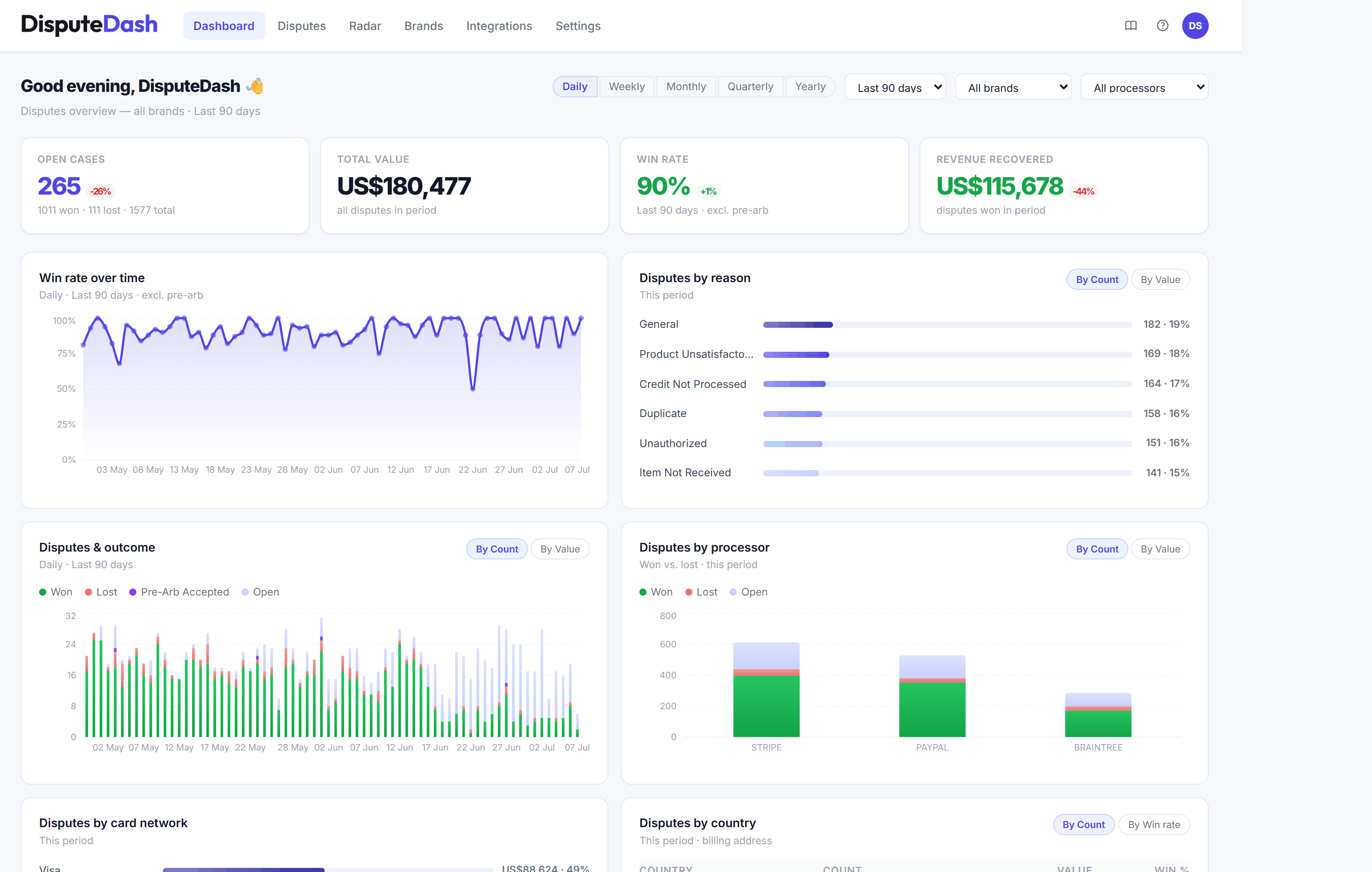
It's our whole-population production number — every fought dispute across all connected brands and processors, not a cherry-picked segment. Your rate depends on your evidence quality, fulfillment discipline, and dispute mix; the free analytics tier shows you your own numbers before you automate anything.
What evidence does DisputeDash use to build a case?
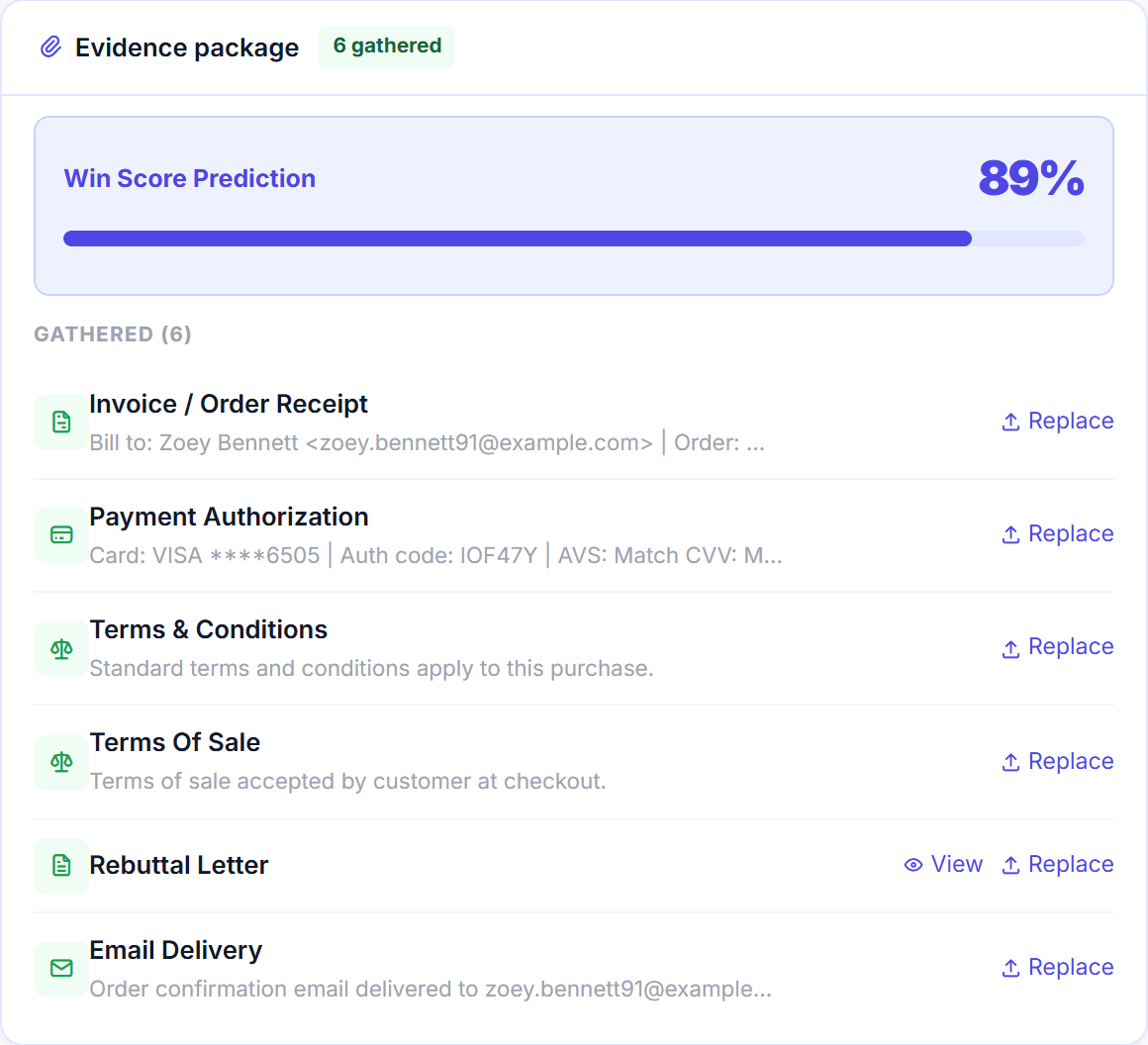
Up to 15 evidence types, matched to the dispute's reason code: carrier tracking and proof of delivery, shipment labels, order details and invoices, payment authorization records, customer emails and support history, subscription and billing history, your policies, and a rebuttal letter written for that reason code. Most of it is gathered automatically from your connected checkout, fulfillment, and support tools.
Can I track the outcomes of my disputes in one place?
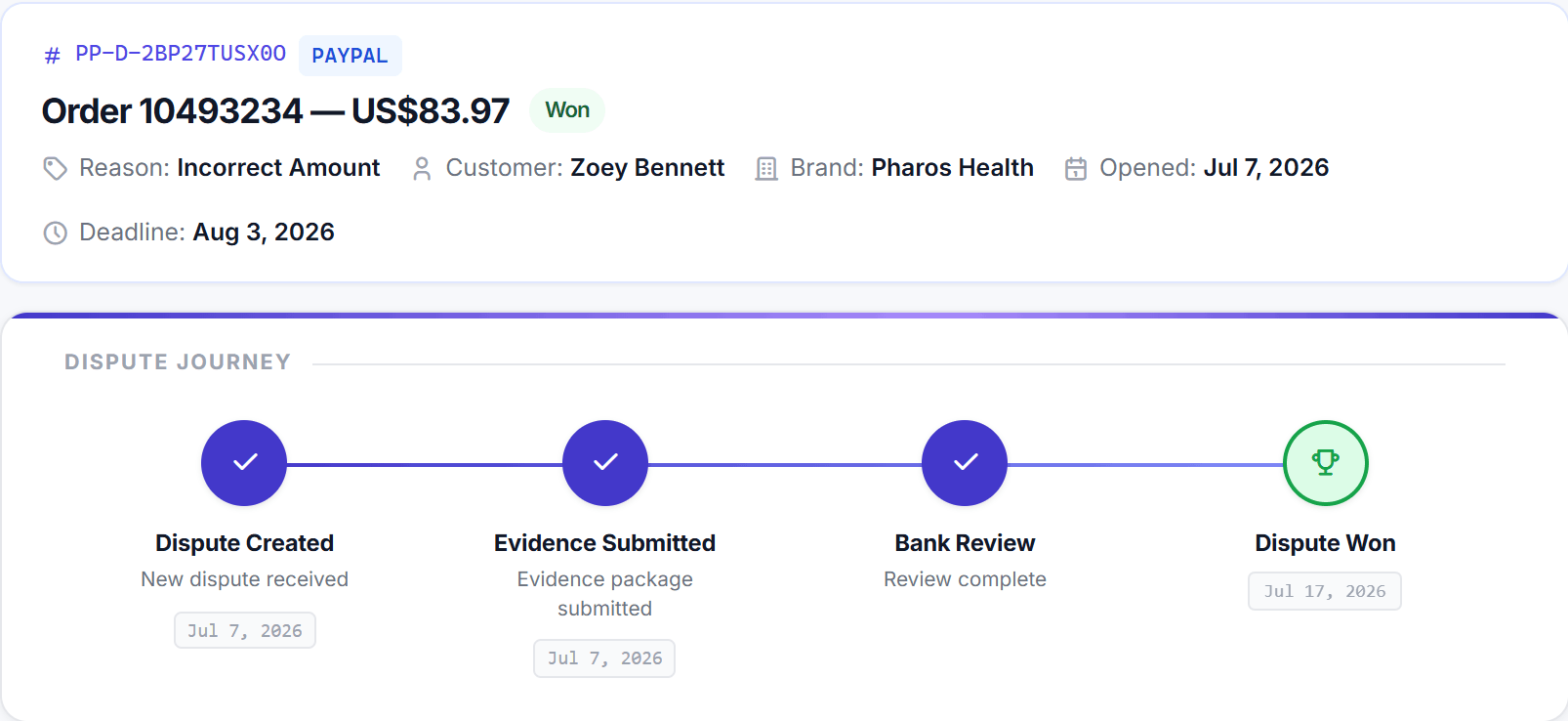
Yes. Every dispute across every brand and processor lives in one workspace — each case shows its journey from received to evidence submitted to won or lost, and analytics roll it up by brand, processor, reason code, and outcome. The analytics tier is free, with no cap and no card required.
Does it scale from one store to many brands?
Yes — multi-brand is native on every plan. Each brand gets its own processor accounts, templates, brand assets, and automation settings; you can run full auto on one brand and manual review on another. Analytics work per brand and rolled up across the portfolio, and you never pay per brand, processor, or seat — only for dispute volume.
Where does AI fit in?
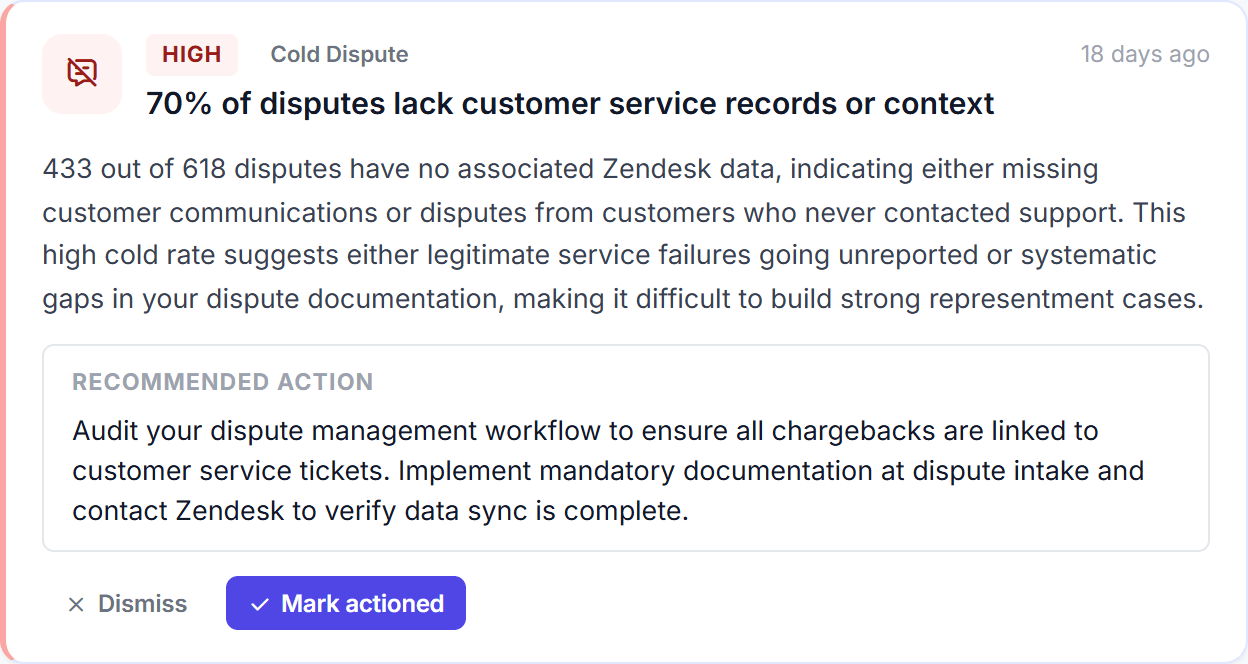
Not where you'd fear. Evidence building is deterministic — your real order, delivery, and payment records, assembled to the reason code's requirements, never generated content. The intelligence lives in Radar: it reads your dispute stream nightly and surfaces what's driving losses — fraud spikes, repeat disputers, problem products — each with a recommended action, plus win-rate insights and live A/B testing to lift results over time.
Which processors and platforms are supported?
Payment processors: Braintree, Stripe, PayPal, PayArc, and Shopify Payments. Order data: Shopify and UltraCart. Shipping: ShipStation and 1,200+ shipping carriers. Support history: Zendesk. Data export: BigQuery. One connection per tool, and evidence starts flowing.
What is dispute management?
Dispute management is everything that happens between a customer disputing a charge and the final decision: catching the dispute, understanding the reason code, gathering proof, writing the response, submitting it on time, and tracking the outcome. Done by hand it's hours per case under a bank-set deadline. DisputeDash runs that whole cycle automatically.
What's the difference between a dispute and a chargeback?
A dispute is the umbrella term for a customer contesting a charge. A chargeback is the formal stage where the bank reverses the payment and takes the money out of your account while the case is decided. Some disputes start softer — a PayPal inquiry, for example — and only become chargebacks if unresolved. DisputeDash handles the full range, from inquiry to chargeback to pre-arbitration.
How long does setup take?
It's fully self-serve: connect your processor and your order source, and DisputeDash starts pulling disputes and building evidence the same day. No engineering work, no services engagement, no credit card for the free tier.